DIY Papercraft Valentine Teddy Bear: A 3D SVG Shapes Review
As a blog designer and digital publisher, I am constantly scanning the creative marketplace for assets that do more than just look cute. I need graphic design assets that translate well into editorial layouts, drive clicks on social media, and maintain a high standard of visual quality for my readers. When I first encountered the DIY Papercraft Valentine Teddy Bear, my immediate reaction was to evaluate its potential beyond the craft table. This isn't just a weekend project; it is a versatile digital download that offers significant value for content creators looking to inject warmth and personality into their web design and content marketing strategies.
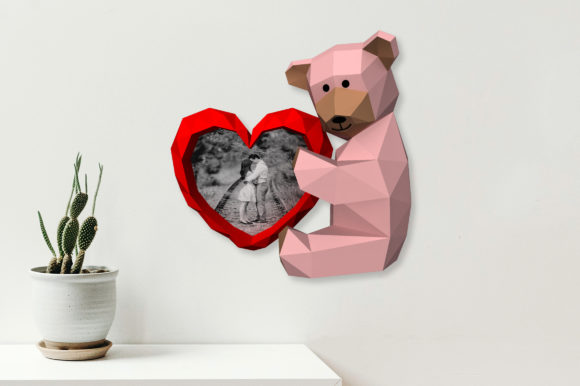
The first impression of this asset is one of tactile charm. In an era of flat, vector-heavy modern design, there is something incredibly engaging about the depth and texture implied by a 3D paper model. The DIY Papercraft Valentine Teddy Bear creates an editorial mood that is playful, feminine, and deeply seasonal, yet it retains a level of sophistication suitable for lifestyle blogs and family-oriented niches. It feels handmade, which instantly builds reader trust and suggests a level of care that polished corporate graphics often lack. For publishers in the parenting, education, or DIY sectors, this asset naturally supports content that needs to feel accessible and authentic.
Elevating Editorial Design with Tactile Visuals
The true power of this asset lies in its versatility across various publishing formats. As a publisher, I see immediate applications for the DIY Papercraft Valentine Teddy Bear in creating high-converting Pinterest pins. The three-dimensional nature of the bear, once assembled, provides excellent shadows and highlights that pop against the busy feeds of social platforms. It serves as a perfect hero image for blog posts about Valentine's Day activities, gift guides, or creative date ideas. Because the final assembled size is a substantial 24 x 27 x 8 centimeters, photographs of the finished product offer enough detail to be used as website headers or featured images without losing resolution.
Beyond standard blog graphics, this file set is a goldmine for creating lead magnets and digital products. Imagine offering a free "Valentine's Craft Guide" as a newsletter incentive. You can use the provided PDF instructions alongside your own photography to create a professional-looking digital guide. The inclusion of multiple file formats—PDF, SVG, DXF, and EPS—means you have the flexibility to integrate the bear's silhouette into Canva templates for social media graphics or even incorporate it into the cover art of an eBook. For affiliate marketers, using a unique, custom-assembled image of the bear in product roundups can significantly improve click-through rates by offering a visual that competitors using stock photos simply cannot match.
Technical Specifications and Workflow Efficiency
From a production standpoint, the efficiency of this asset is noteworthy. The estimated assembling time of four hours indicates a project of moderate complexity, which is perfect for tutorial content. It is substantial enough to justify a detailed blog post or video but not so intricate that it alienates casual crafters. The files are categorized under Shapes, which speaks to the geometric precision of the cut files. This precision is crucial when scaling the design for different uses, such as resizing elements for a small business branding kit or creating stickers for a planner community.
The package includes everything needed for a seamless workflow: one PDF for manual cutting and tracing, and vector files (SVG, DXF, EPS) for those utilizing electronic cutting machines. This variety ensures that whether your audience is traditionalists with scissors or tech-savvy users with Cricut or Silhouette machines, the DIY Papercraft Valentine Teddy Bear remains accessible. To assemble the final piece, users will need a colored printer, glue, scissors, a craft knife, and a scorer or bone folder. Mentioning these specific tools in your content adds a layer of practical authority to your reviews and tutorials.
Strategic Placement for Maximum Impact
To maximize the return on this creative design investment, strategic placement is key. This asset works best as a focal point. Use high-resolution photos of the assembled bear as category thumbnails for your "Seasonal Crafts" or "Gift Ideas" sections. The distinct shape aids in brand identity, making your site instantly recognizable to returning visitors. It also excels as an accent in newsletter headers, where the soft, paper-textured aesthetic can break up the monotony of text-heavy emails.
However, caution is required when deploying this asset in certain contexts. Due to its intricate details and reliance on shadow for depth, the DIY Papercraft Valentine Teddy Bear may lose clarity when scaled down to very small mobile thumbnails. It is also less effective on text-heavy blog images where the background needs to be uniform to ensure readability. Furthermore, while it is perfect for lifestyle and creative niches, it might feel out of place in serious professional or corporate content environments that demand a starkly minimal visual system. Always test how the image looks in black and white if your site has a monochrome mode, and ensure there is sufficient contrast when placing text over photographs of the bear.
Final Publisher Notes and Licensing
Before integrating this into your monetized channels, rigorous testing is essential. Preview the images on both desktop and mobile screens to ensure the visual hierarchy remains intact. Experiment with pairing the imagery of the bear alongside various typography styles; it pairs beautifully with handwritten fonts for a whimsical look but can also ground serif fonts for a more classic editorial feel. Pay close attention to file sizes; while the source vectors are crisp, any photographic derivatives must be compressed properly to maintain fast page load speeds, a critical factor for SEO and user experience.
Finally, always confirm the commercial licensing terms before using the DIY Papercraft Valentine Teddy Bear in paid content products or on affiliate pages. Understanding the difference between personal use and commercial license rights is vital for protecting your business. When used correctly, this 3D SVG asset is more than just a pattern; it is a tool for enhancing visual communication, strengthening your brand identity, and delivering high-quality, engaging content that resonates with your audience. By leveraging its unique dimensional qualities, you can elevate your editorial design from standard to exceptional.